Projects and Works
My Brand Logo

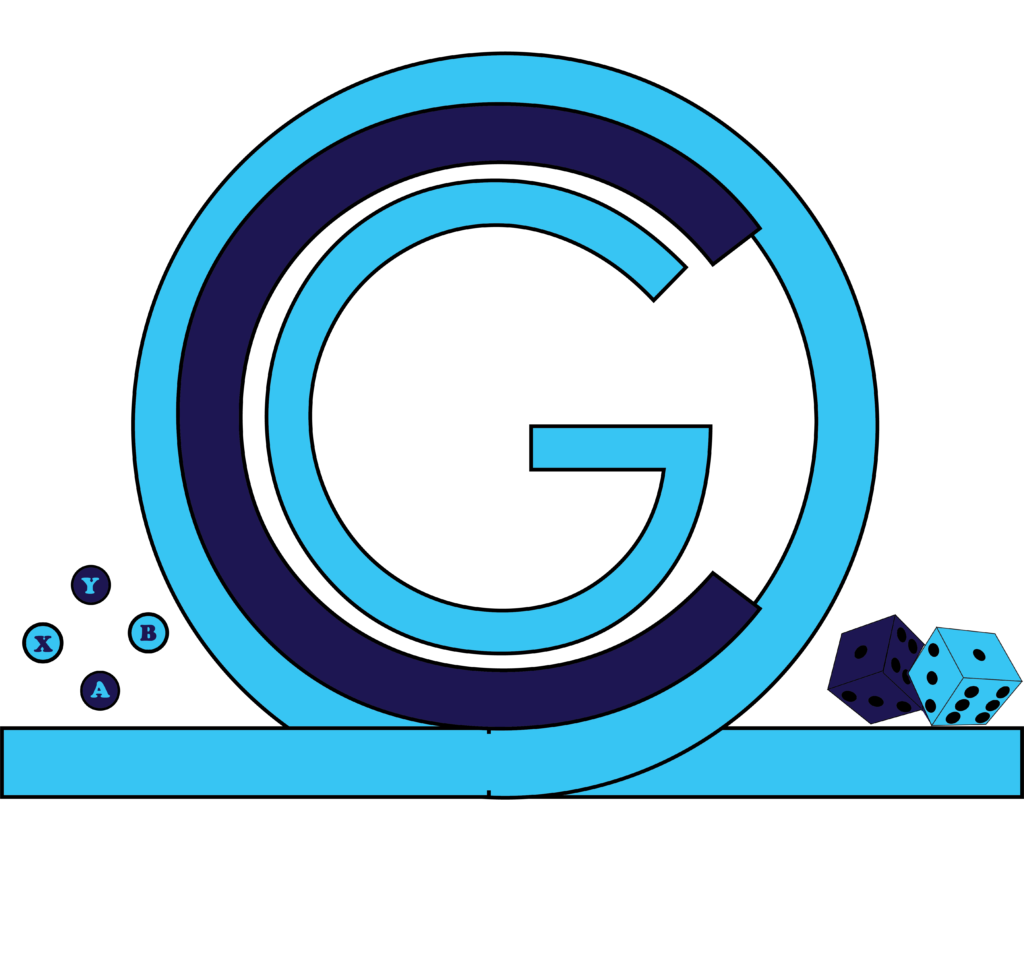
Colin Gallagher's Brand Logo
Info about logo
The CG logo represents both my initials and my identity as a creative and game designer. The interlocking C and G monogram was designed to feel bold and graphic while remaining clean and professional, something that could live on a portfolio or business card without feeling out of place in either a creative or technical context.
A key part of the design is the loop. It has a dual meaning for me. On one hand, it reflects the iterative nature of game design and creative work, the constant cycle of designing, testing, refining, and starting again. On the other hand, it is a personal nod to my love of roller coasters. The loop is one of the most iconic elements in coaster design, and it captures the same thing I chase in my work, which is the feeling of momentum, thrill, and an experience that pulls you in and does not let go.
The two design elements flanking the monogram tell the story of where my work lives. The controller buttons on the left, referencing the classic A, B, X, Y layout, represent my background in video games, digital design, and interactive experience. The dice on the right represent tabletop game design, worldbuilding, and the analog side of game craft that I am equally passionate about. Together, they show that I work across both sides of the game design world.
The two-tone blue palette, pairing a deep navy with a bright sky blue, was chosen to feel modern and creative without being loud. It gives the logo energy while keeping it versatile.
My Geographical Information Systems Project
Areas to Upgrade for a Hurricane in Massachusetts

GIS Project Poster Overview
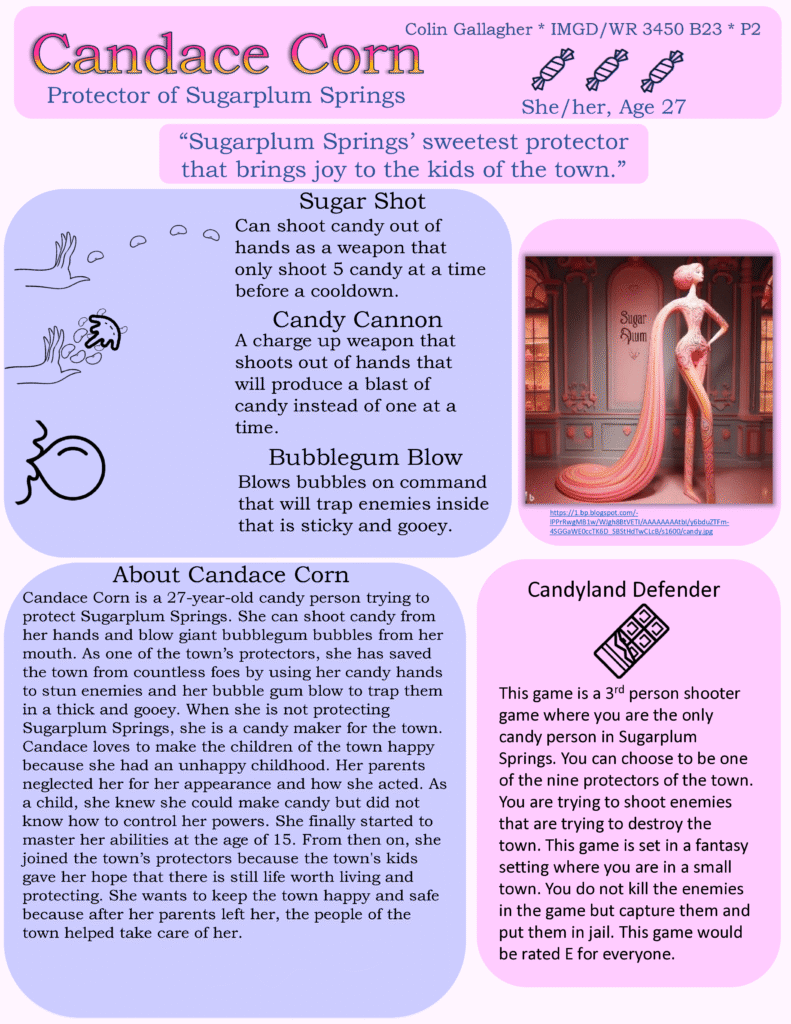
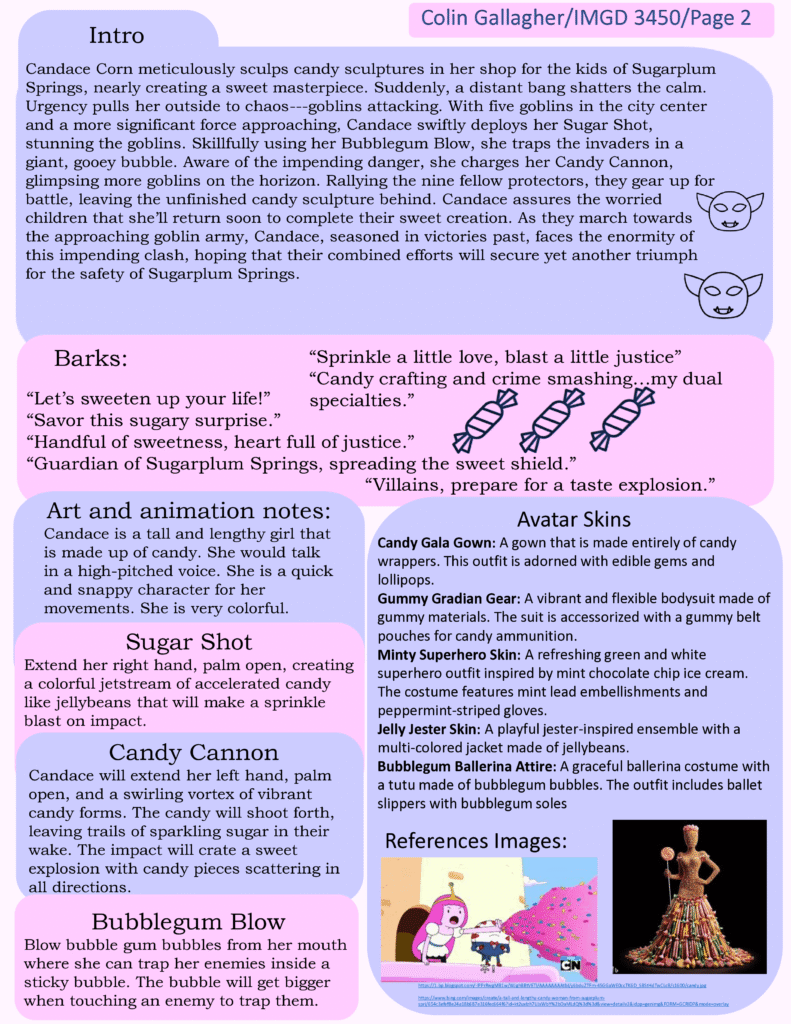
Character Concept With Game Concept
My 3D Model of Leatherhead
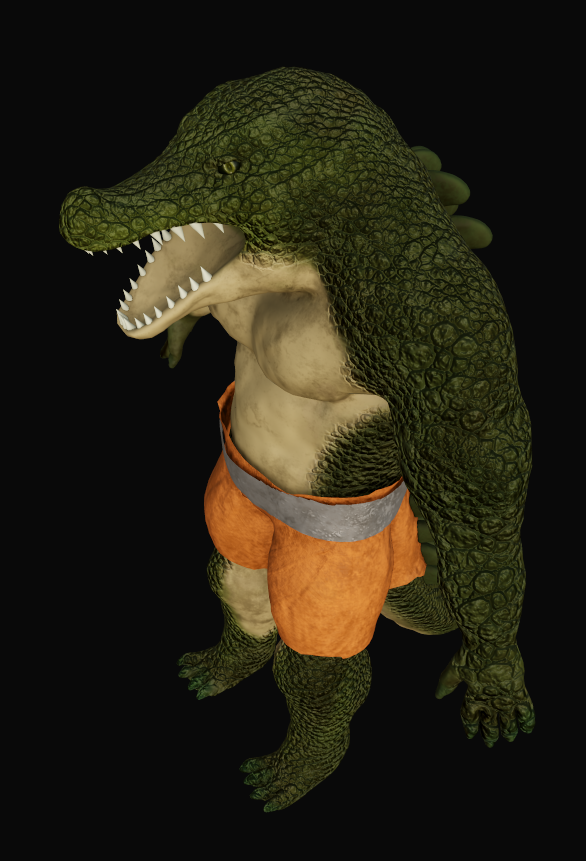
Info about My 3D Model
Leatherhead is a fully realized 3D character I built from the ground up over the course of five weeks. I started the sculpt in ZBrush using ZSpheres to establish the underlying armature and body proportions before refining the surface detail, layering in the scaly texture, musculature, and facial features that give the character his personality. Once the high-poly sculpt was complete, I optimized the model for real-time use in Unreal Engine 5, reducing the polygon count while preserving the detail that mattered most.
The most challenging part of the optimization process was the head. Every time I tried to smooth and remesh it, parts of the mesh would disappear, which forced me to spend one to two hours troubleshooting and rebuilding those sections to get the geometry smooth and uniform. It was a frustrating problem, but working through it taught me a lot about how ZBrush handles complex mesh topology under the hood.
I then brought the model into Substance Painter to create the full texture set, painting the skin tones, scales, and clothing to give Leatherhead his distinctive look. After texturing, I moved into 3DS Max where I box-rigged the character, building out the skeleton and weighting the mesh so the body would deform naturally with movement. Once the rig was complete, I brought everything into UE5 and applied animations so he could move convincingly inside the engine. Seeing him run and interact within that environment was the moment the whole project came together, going from a static sculpt to a living, moving character ready for a game environment.