
Games I Made and Help Make
Uncaged

Info on Uncaged
Uncaged is a 3D platformer I helped develop as part of a 6-person cross-disciplinary team at WPI, built entirely in Unreal Engine 5 over a 6-week production cycle. My contributions spanned several areas of the project. I handled the user interface design, sourced and implemented the music and audio to match the tone and emotional pacing of the game, and collaborated on character implementation. I also took on bug-fixing responsibilities, including tracking down and resolving enemy detection issues that were threatening the timeline, and integrated animations, textures, and imported models into the engine to ensure everything came together cohesively. We shipped a fully playable game and received an A with high praise from both our instructors and our audience.
Dare to Vote
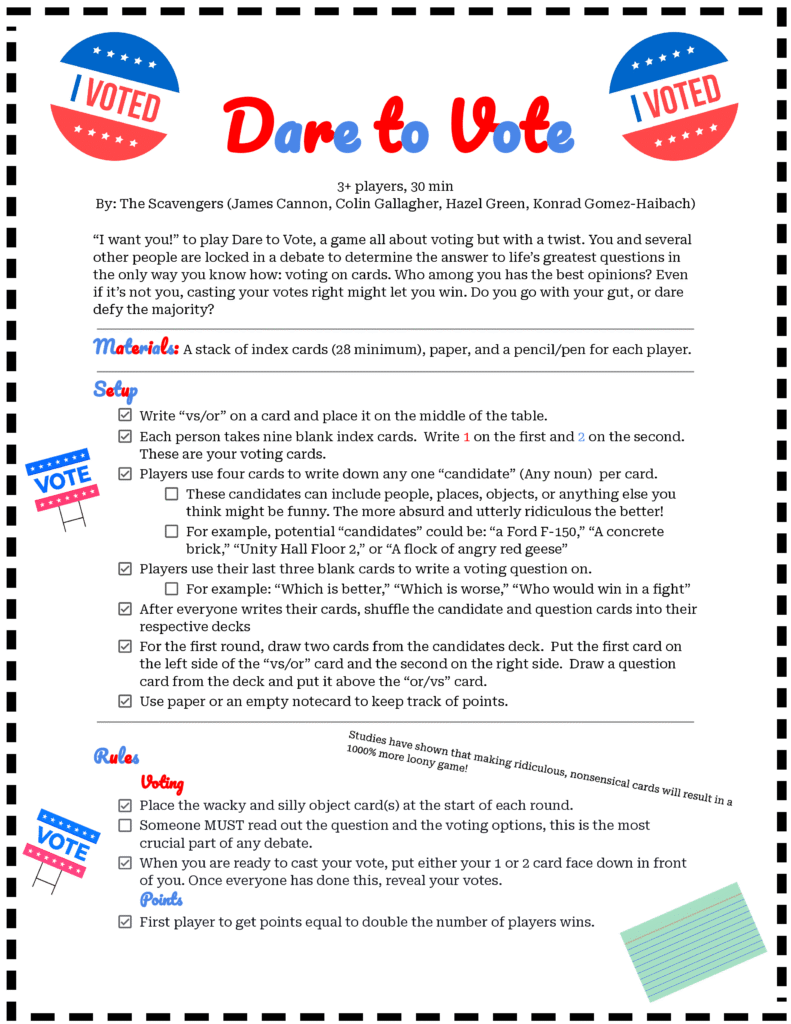
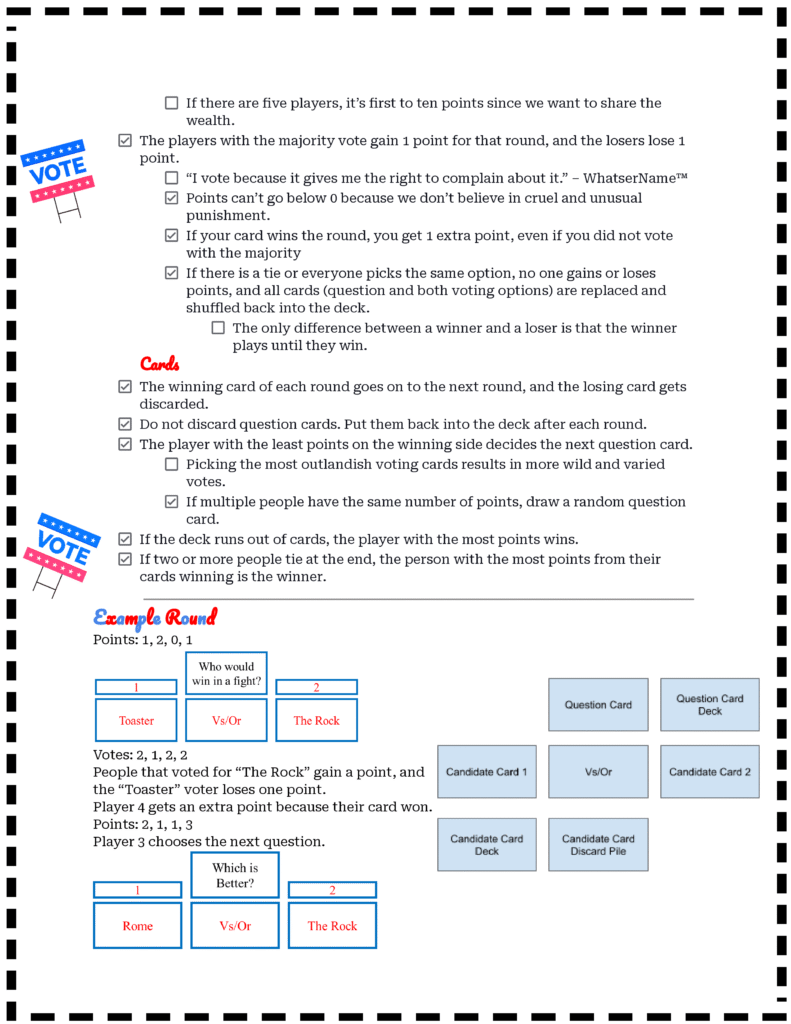
Info about Dare to Vote
Dare to Vote is a party game I came up with as part of a team of four at WPI. The original concept I brought to the group was a voting game with a dare mechanic, where losing a round meant doing a dare. After discussing it as a team, we decided to drop the dare element before even playtesting because dares can easily go too far and create awkward situations that work against the fun. Instead, we kept the voting mechanic at the core and built the game around something simpler: write outlandish candidates on cards, vote on which wins a silly question like ‘who would win in a fight,’ and earn points by either having your card win or voting with the majority.
The design process involved two rounds of playtesting and significant iteration. After the first playtest, players disliked the points system and found the rules confusing, so we reworked how points were awarded and made major revisions to the rules sheet. The second playtest showed the core mechanics were landing well, but setup still took too long, and some rules still confused players, so we clarified them again. The most rewarding feedback was that players wanted to keep going after the game ended, which told us the core loop was working. It taught me a lot about taking a rough idea, testing it with real players, and using what you learn to make something that actually feels good to play.
Casino Royale
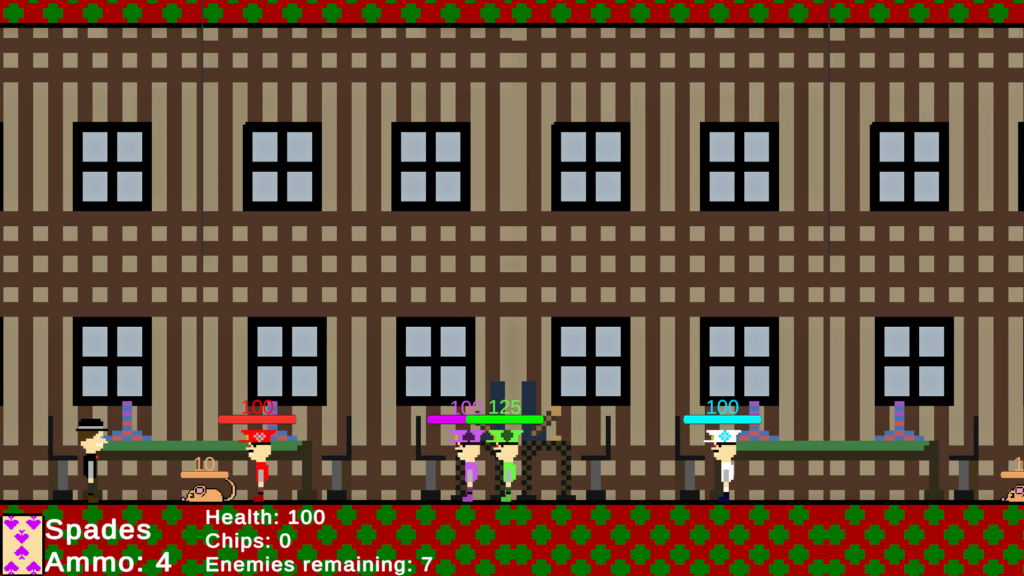
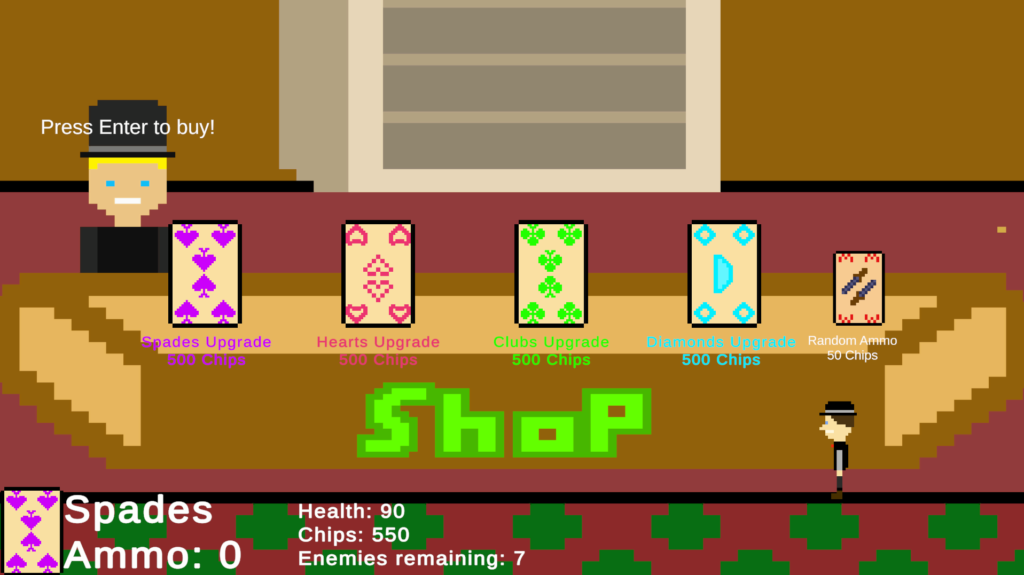
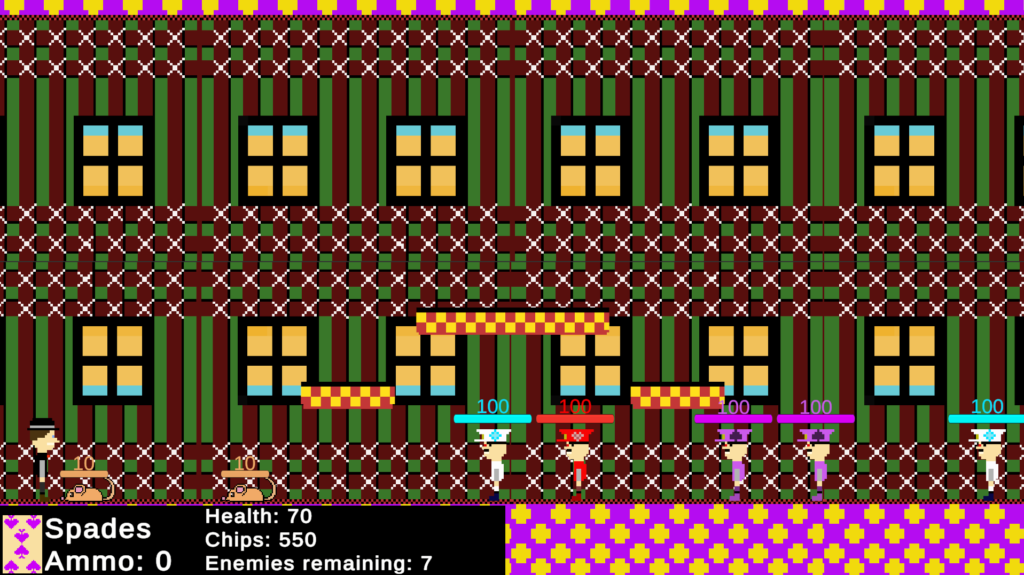
Casino Royale is a 2D arcade-style platformer beat ’em up built in Unity with Wwise audio integration, developed as part of a three-person team at WPI. Players fight through four levels of casino police and waves of animals using a deck of playing cards and melee weapons tied to the four suits, with a shop system for upgrading cards and buying ammo between stages.
My role was all of the game’s art, which I took on entirely myself and which marked my first time creating video game animations. I designed and animated every sprite in the game using Piskel, including the main character, cop enemies with suit-specific color variants, a giant boss, rats, cats, weapons, platforms, and five distinct backgrounds spanning casino floors, a shop, and outside environments. I handled all walking and weapon animations, created the shop and stage-progression signs, and built the guide menu, including both the visual design and most of its code implementation. Each sprite went through multiple iterations across six build cycles as the team responded to playtester feedback, shaping everything from enemy color differentiation to how damage states were communicated visually. Working through rounds of critique and tuning, from early hitbox issues to the final polish pass on UI and health balance, gave me hands-on experience translating playtest notes into concrete art and design changes that improved the feel of the game.
Echoes of the Salt Flats is a tabletop roleplaying game set in Khalyn, a richly built original world developed as my Major Qualifying Project at WPI. The game takes place primarily across the salt flats of Khalyn, with additional biomes including Spire Forests, the Fae Wilds, Fairy Wing Forests, and Fungal Overgrowth, each with their own geography, history, and traditions. One of my core design goals was making the mechanics feel like they grew naturally out of the world itself, including specific mechanics inspired directly by the salt flats setting, so that the rules and the lore reinforce each other rather than feeling separate. Players build characters by choosing from original playable species, defining a backstory, and managing stats alongside a modifier and ability check system. My contributions focused on the worldbuilding side: I designed the major playable species of Khalyn from the ground up, defining what each species is composed of, where they live, their characteristics, and the cultures and traditions that shape how they exist in the world. The team also collectively produced a lore book to support the full project. Building Khalyn taught me how to design worlds where the rules, the setting, and the player experience all feel like they belong to the same place.